In this month's newsletter:
- Take Action
- Announcements
- Events
- News
- Online Resources
TAKE ACTION
The 3rd annual Arapaho Unity Youth Gathering is happening in June! Let’s give them a generous welcome to their Arapaho homeland.
Please donate now to meet our $30,000 goal!

Arapaho youth and elders from Wyoming and Oklahoma will unite for a week of exploring and learning together. The Rocky Mountain Ecodharma Retreat Center is generously hosting them! Right Relationship Boulder is raising funds to support their travel, food, and the elders who offer guidance and wisdom, including Arapaho language, history, and ecological knowledge.
The Northern and Southern Arapaho tribes have been geographically separated for 150 years, but “we are one people,” says Gathering organizer Fred Mosqueda. “By being together to learn the language, traditions, and culture, our youth will become more Arapaho, not more Northern or Southern. They will become stronger.” That’s the exciting goal of this UNITY gathering!
"This is an experience that will stay with the youth for the rest of their lives." -- Cedar Shirey
“Everyone who participated last year wants to come back!” – Fred Mosqueda
The ancestors of these Arapaho youths were forcibly removed from their Colorado homeland. Let’s begin a new chapter, welcoming them home. Please make a generous donation today!
Donate on the Right Relationship Boulder website: rightrelationshipboulder.org/donate (In the dropdown menu, select Land Group Projects).
Or mail a check via Mediators Foundation, our fiscal sponsor: Mediators Foundation 2525 Arapahoe Ave, E-4 #509 Boulder, CO 80302 (Be sure to write “RRB Land Group” on the memo line)
National Park Signage
The federal government is dismantling Native and Black exhibits at national parks and museums.
From:

RRB:
If we care about telling accurate Native history in our National Parks, now is the time to lift our voices! See this Colorado Sun article for more information.
Please click on this link to submit comments to the Department of the Interior today. You can choose to comment about “signs and other information” about any specific site, so choose a site that is important to you. Or choose many sites and submit comments for them all. For example, one Colorado resident submitted this statement about the Sand Creek Massacre National Historic Site:
It is important to preserve the accurate history of Sand Creek as a massacre site, a massacre perpetrated by the US Cavalry against Native Americans (mostly the elderly, women and children). A marker referring to a supposed "Sand Creek Battleground" was removed in recent years because this was NOT a battleground, but a massacre site. This marker must not be returned to the site, as might be required by the "Secretarial Order" from the current administration. Please do not try to whitewash the history of this site. Historical accuracy is important, current political whims are not. Thank you.
RRB ANNOUNCEMENTS
Join RRB's fundraising account with King Soopers!
Right Relationship Boulder has set up a fundraising account with King Soopers! Link your King Sooper's Rewards Card to "Mediators Foundation" (the RRB fiscal sponsor) and King Sooper's will donate 4% of your purchases to Right Relationship Boulder at no cost to you.
How to sign up:
- Visit: kingsoopers.com/i/community/community-rewards
- Follow the steps to link your rewards card to Mediators Foundation
Why it matters: King Sooper's will donate 4% of your monthly grocery purchases to RRB
RRB Wins 2026 Colorado Lottery Starburst Award!
RRB's Cultivating Connections Group is elated to announce winning the 2026 Colorado Lottery Starburst Award, having been nominated by the Colorado Outdoor Equity Grant Program. The Arapaho and Cultivating Connections Group learned of this nomination in late March and we are very grateful for the opportunity to receive this award and be the recipient of the Outdoor Equity Grant for two grant cycles. This grant, along with other donors, has made RRB's annual Arapaho Language and Culture Camp possible for several years.
With this award will also be an opportunity to be a part of the People's Choice voting, which launches in July. Be on the lookout to vote for RRB coming up soon!
We celebrate this win with 17 other meaningful projects throughout Colorado. Thank you to all who have supported us.
More information here.
EVENTS
A conversation on railroads in Indian Country

This coming April 8th, please join us as we host historian Alessandra La Rocca Link and award-winning artist Dallin Maybee (Seneca/Northern Arapaho) for a conversation about the impact of railroads in Indian Country.
Working across their respective disciplines, Link and Maybee challenge traditional railroad narratives by centering Indigenous histories and perspectives. Railroads are hitched to a long history of visual storytelling — one that Maybee interrogates through art and Link through writing.
Together, they will explore the devastation of railroad colonialism alongside the creative ways Native peoples resisted, adapted, and carved out futures for themselves in the modern world.
“The Blanket Exercise”

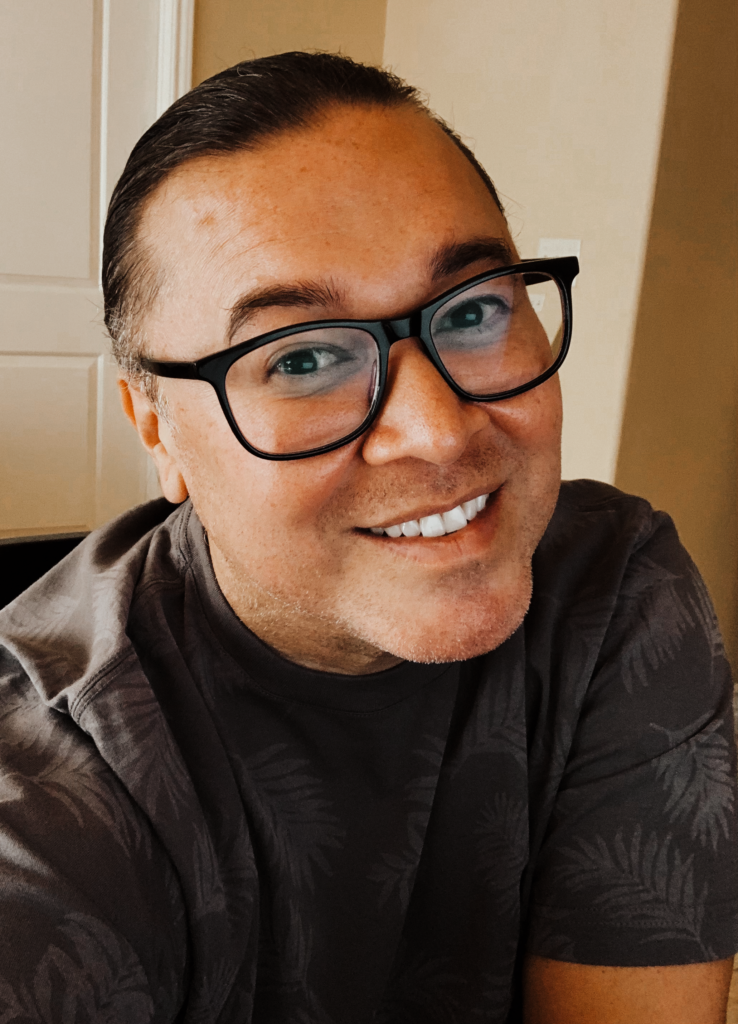
Join Vance Blackfox, an Indigenous theologian and citizen of the Cherokee Nation, for this “powerful experiential learning tool that guides a group of participants through 500+ years of Indigenous history, highlighting the relationship between Tribal nations and the European explorers, colonial settlers, and U.S. federal and state governments.”
Vance is the Director of Ecumenical and Tribal Relations of the Indigenous Theological Circle. Previously, Vance served as the churchwide organization of the ELCA as the Director of Indigenous Ministries and Tribal Relations. Vance is the founder and director of Other+Wise, the cultural education and immersion program that our CTS youth partnered with in 2025 and 2020.
Invite friends and community members to join us for this experience. Adults, college and high school students are welcome to participate in this activity. Any donations that you make will go to the CTS Justice and Equity Fund to sponsor future events and experiences like this one.
More About “The Blanket Exercise”
The Blanket Exercise is a powerful experiential learning tool that guides a group of participants through 500+ years of Indigenous history, highlighting the relationship between Tribal nations and the European explorers, colonial settlers, and U.S. federal and state governments.
The exercise is interactive and requires participants, as they are able, to stand and move throughout the first hour of the experience. The second hour allows participants to process the experience and share what they may have learned and what they will take away.
The Blanket Exercise was first created in Canada and has since been adapted and used to educate the general public there, in the United States, and in many other parts of the world. The exercise does engage participants both intellectually and emotionally and can, in some instances, affect individuals deeply.
A History of Colorado's Indigenous Peoples
SAVE THE DATE!

Rick Williams will be speaking at St. Mary Magdalene on Sunday, April 19 at 3:00. Please put this date on your calendar and pass the word to your friends, family, neighbors and community! Rick's talk will be from 3:00-4:00, afterward a restroom break and appetizers, and Q&As until 5:00.
Have you wondered about Boulder County’s Indigenous history? Are you aware of how the Doctrine of Discovery/Manifest Destiny paved the way for the [near] genocide of American Indians? What is the purpose of a Land Acknowledgement and should we adopt one—why? why not? Would you like to know more about the Sand Creek Massacre on November 29, 1864? Why are there no Indian reservations on the Front Range of Colorado?
Richard “Rick” Williams is an enrolled member of the Oglala Lakota Tribe and is part Cheyenne. Rick is currently the Leader of the People of the Sacred Land, a nonprofit located in Colorado, dedicated to uncovering the truth about Native-land dispossession and supporting Indigenous cultural preservation. Rick will answer all your questions and more!
RRB and Museum of Boulder invite you to…
Ben Ridgley: “Arapaho History and Presence in Colorado”
Wednesday, April 22, 7 pm at the Museum of Boulder
Free and open to the public — Register here

Ben Ridgley is an esteemed Arapaho elder, great-grandson of Chief Little Raven. A former chairman and co-chairman for the Northern Arapaho Tribal Leadership and former Historic Preservation officer, Ridgley currently serves on the Executive Board of the Wyoming Historical Society. As an expert on the history of the Sand Creek Massacre, Ridgley inspired the installation of the Sand Creek Massacre trail highway marker signs in Wyoming, which he hopes to extend into Colorado. He has been a consultant with a number of Colorado institutions, including the U.S. Air Force Academy, the Colorado Springs Pioneer Museum, the cities of Boulder and Littleton, and several Colorado public schools.
“Ben Ridgley stands as a beacon for those who believe in the power of remembering, learning, and celebrating Native heritage. His journey is a testament to resilience, leadership, and the enduring spirit of the Northern Arapaho people.” -- Alexandra Philp, Executive Director of the Wyoming Historical Society
“It’s hard sharing our true history, but people need to hear it… It is very encouraging to see Native history and culture getting wider acknowledgment.” – Ben Ridgley
MMIW Broomfield Native Art Market
May 2nd, 11am-4pm

Sand Creek Massacre National Historic Site

Friday, May 22 (4:30 pm) to Saturday, May 23 (2:00 pm), 2026
Kiowa County, CO

***Note: This journey is capped at 45 participants. Because of the high level of interest and limited capacity, we ask that participants from last year’s offering give priority to new participants. If you would like to be placed on a wait-list, please email Sarah Hartzell.***
Journey with Us
What took place at Sand Creek on Nov. 29, 1864, was eight hours: “…that changed the Great Plains forever…The Sand Creek Massacre: profound, symbolic, spiritual, controversial, a site unlike any other in America.” National Park Service.
You are invited into a time of sacred journey, a time to simply be present with a harsh reality from the past that continues to shape our lives in the 21st century. We will travel to the Sand Creek Massacre National Historic Site in Kiowa County, Colorado, where we will experience the site of the November 29, 1864, massacre of peaceably encamped Arapaho and Cheyenne peoples by the U.S. Army. We will hear the history from National Park guides as well as stories from Native elders who are descendants of people who were there. Following presentations and a time of prayer, participants will have ample opportunity to walk the paths individually or in small groups.
Guides on the journey include:
- Co-founders of the Colorado Coalition of Indigenous Allies Marti Dever and Sarah Hartzell
- Co-founder and Executive Director Sarah Augustine, the Rev. Joe Hubbard, and Amanda Pittman from the Coalition to Dismantle the Doctrine of Discovery
- Sand Creek Guide Martton Dormish from Every Day Epics.
Cost: $150 This fee covers travel and honorariums for speakers and elders, a donation to the Sand Creek Massacre Foundation, dinner on Friday evening, and lunch on Friday.We hope to make this journey possible to all wishing to participate. For financial assistance, please reach out to Tracy Methe.
Lodging: Participants are responsible for their own lodging. We are holding a block of rooms at the Cobblestone Hotel in Eads, Colorado (719-438 2021). When you call, ask for the group rate of ($159) plus tax for the Colorado Coalition of Indigenous Allies. You can also book on line using Group Code: COLOR260522-185906Rooms with 2 queen beds are available. The rooms are newly refurbished and must be reserved by April 22 to obtain the group rate.
You are also welcome to make your own arrangements elsewhere. Travelers Lodge is nearby but has limited rooms and doesn’t offer breakfast. However, nearby JJ’s Restaurant is open for breakfast.
Travel Waiver: Be sure to download, sign, and return the Travel Waiver, email to tracy@episcopalcolorado.org or mail to: The Episcopal Church in Colorado
Attn: Truth & Remembrance Sacred Journey
1300 N. Washington St.
Denver, CO 80203
Contact: Tracy Methe
Colorado’s People of the Sacred Land exhibit, opening and artist talk at the Museum of Boulder
Exhibit runs April 24, 2026 - July 5, 2026
Exhibit opening will be either Friday, April 24 or Saturday, April 25, 5:30-7:00 PM
Artist talk date to be announced. Check here for the final dates.
Colorado’s People of the Sacred Land Exhibit
As we consider the meaning of the 250th anniversary of American Independence and the 150th anniversary of Colorado statehood, let’s center the voices and perspectives of Indigenous people, past and present, and reflect on the legacies we inherit. This exhibit highlights key findings from the Truth, Restoration, and Education Commission (TREC) Reports, paired with artwork by Native artists addressing the personal impact of these histories.
Featured artists:
- Chris Chavez
- Sage Deal
- Maxx W Lake
- George Curtis Levi
- Raelene Whiteshield
The TREC Reports by the People of the Sacred Land detail the losses Colorado’s historic tribes incurred. The Historic Loss Assessment details land cessions – legal, illegal, and coerced – and the underlying circumstances that precipitated such events. Through extensive research of individual title transfers, they report the value of dispossessed lands to be approximately $1.17 trillion (market value in 2021). The Legal and Political History of Colorado Tribes explores the legal and political history of the Apache of Oklahoma, Cheyenne & Arapaho Tribes of Oklahoma, Comanche, Kiowa, Northern Arapaho, Northern Cheyenne, Shoshone, Ute Tribe of Utah, Southern Ute, and Ute Mountain Ute. The third report examines the history of Indian education in Colorado.
This exhibit was developed in partnership with an undergraduate class at CU Boulder by Michela Ardizzoni titled “Introduction to Social Change in the Arts.” Students worked directly with the Reports and the featured artists to co-curate this reflection on our history. It was funded through the CU Boulder PACES Experiential Learning Design Accelerator.More information here.
NEWS
Ernest House Jr. to shape Denver’s American Indian Cultural Embassy
Read more here.

By Deborah Grigsby March 5, 2026. Ernest House, Jr., Director of Tribal and Indigenous Engagement at the Keystone Policy Center, has been named to lead planning efforts for Denver's future American Indian Cultural Embassy. (Courtesy, City and County of Denver)
Denver has tapped Ernest House Jr., director of tribal and Indigenous engagement at the Keystone Policy Center, to lead planning efforts for the city’s future American Indian Cultural Embassy.
House, a member of the Ute Mountain Tribe, will guide an advisory panel of Native American leaders to help shape the $20 million voter-approved project that “celebrates and supports” American Indian and Alaska Native communities.
Denver Mayor Mike Johnston lauded House, stating that he “brings a lifetime of leadership, integrity and commitment to Native communities to this important effort,” according to a news release.
“His experience strengthening tribal partnerships and elevating Indigenous voices makes him uniquely qualified to help guide the vision for the American Indian Cultural Embassy,” the mayor said. “Under his leadership, this voter-approved investment will reflect the values, history and future of Denver’s American Indian and Alaska Native communities, ensuring this space is shaped by and for the people it is meant to serve.”
A Gates Family Foundation and German Marshall Memorial Fellow, House serves on several boards, including The Gates Family Foundation, The Nature Conservancy, National Western Center Authority, and the Telluride Institute, according to the embassy’s page on the city’s website.
He is the son of the late Ernest House, Sr., a long-time tribal leader, and great-grandson of Chief Jack House, the last hereditary chief of the Ute Mountain Ute Tribe.
The new embassy is slated for construction in Denver’s District 11, near 56th Avenue and Peña Boulevard.
The site itself is right next to the Rocky Mountain Arsenal National Wildlife Refuge, where a herd of buffalo currently roam.
Supporters and community members hope the embassy’s proximity to Denver International Airport will draw new Indigenous and First Nations organizations and events to the Denver area.
“Indigenous communities have always led with a deep understanding of land, culture, and responsibility to future generations,” House said in the release. “Efforts like this create space not only to recognize history, but to support living cultures and strengthen the role of Native leadership in shaping the future. When we approach this work with humility and partnership, we can build something lasting.”
Originally, the embassy was set to receive $5 million in funding from the $950 million Denver Vibrant Bond package, per the executive committee’s recommendation.
However, after strong advocacy and City Council input on equity, Johnston recommended an additional $15 million in bond money for the project.
At Colorado’s national parks, signs about Ute history, pikas and Alpine tundra flagged for potential removal under Trump orders
Read more here.

A sign at Rocky Mountain National Park discusses how rising temperatures are impacting American pika and white-tailed ptarmigan. Staff at the park flagged the sign for review under President Donald Trump's order to remove materials that contain "improper partisan ideology." U.S. Department of Interior/Courtesy photo
An internal government database showed materials at Rocky Mountain National Park and Mesa Verde National Park that were flagged for potential removal under orders to remove items that “disparage” Americans By: Ryan Spencer
At Mesa Verde National Park, a trailside sign invites visitors to gaze across the canyon at a stone-masonry tower on the neighboring Ute Mountain Ute Reservation.
The sign describes the history of the Ute people, a Native American tribe that traditionally migrated seasonally between the mountains and the valleys of their homelands, which encompassed nearly all of modern-day Colorado and Utah.
It recounts the impact of settlers on the Ute people during Western expansion and how the U.S. government established a reservation system that reduced the tribe’s territory to only a sliver of its ancestral lands.
Colorado lawmakers step in — again — to urge federal action on stalled tribal water access
Read more here.

A resolution that may be “wishful thinking” calls attention to water priorities for the Ute Mountain Ute and Southern Ute tribes.
The Southern Ute and Ute Mountain Ute Indian tribes have been pushing for the federal government to uphold its water-related responsibilities for years. Now, Colorado legislators are jumping back into the fight.
Lawmakers in the Colorado House of Representatives unanimously passed a resolution advocating for tribal water access Friday, during Ute Day at the Capitol. The resolution — which lists a series of longheld tribal water priorities and urges federal agencies to respond — awaits consideration in the Senate.
Bureau of Indian Affairs could face reorganization, deeper staff cuts
Read more here.
Tribal leaders say previous cuts have already impacted the government’s ability to carry out programs in Indian Country.
The Bureau of Indian Affairs is facing a significant overhaul, including further staff cuts, according to a statement from a tribal leader during a congressional hearing last week about federal funding for Indigenous communities for fiscal year 2027.
“Just this week, we learned that the Bureau of Indian Affairs is planning on releasing and implementing a reorganization plan that will make significant cuts to the staff critical in administering programs and distributing funding to tribal nations,” said Mark Macarro, president of the National Congress of American Indians and chairman of the Pechanga Band of Indians. “This action has been done without consultation with tribal nations and without consideration of the impact it will have on the delivery of programs and services.”
Online Resources

Truth, Restoration, and Education Reports (TREC) https://peopleofthesacredland.org/trec-reports/
The Truth, Restoration & Education Commission, led by the People of the Sacred Land in Colorado, has been examining the legal and political pasts of the state’s tribes, with a focus on restoring the status of tribal nations. In one of the final reports, the commission reveals a history of genocide, land grab, theft in perpetuity and the elimination of Tribal Sovereignty in Colorado, and recommends actions for restoration and reparations.
First Nations’ colleague and People of the Sacred Land President Rick Williams (Oglala Lakota and Cheyenne) tells CBS News, "We would like to see the state of Colorado and the federal government own their responsibility for restoring justice to Indian people in Colorado. It isn't doing land acknowledgments.... It's about helping us protect sacred sites. It's about trying to find ways to maybe bring these people home." See the 3 min. interview and article here.
The Truth About 250-150 Project
Click here for the StoryMap

The Truth About 250–150 Collective unites Wakáška Yuza – Native Youth Leaders, Control Group Productions, and Create áyA to tell Colorado’s true history through Native-led art, performance, and story. Together, they are developing a mobile history and art exhibit that will travel statewide in 2026, blending Native truth-telling with contemporary creative expression.
At its center is The Breathing Healing Bus, an immersive gallery and theatre experience by Control Group Productions in collaboration with Cinnamon Kills First, Bill TallBull, and Kaden Walksnice (Cheyenne). In 2024, the Bus carried audiences from Denver to the Sand Creek Massacre site, confronting Colorado’s violent origins and offering a space for reflection and healing.
In 2025, the project expanded to tell the broader story of Native Colorado, including the enduring presence of the Ute Nations, through their voices, and to highlight findings from the Truth Restoration Education Commission (TREC) report that includes the legal and political histories of ten Tribal Nations that ceded land to what is now Colorado.
In 2026, the Breathing Healing Bus will anchor the Truth About 250–150 Mobile Tour, a Native-led initiative DISRUPTING Colorado’s official 150th-anniversary celebration. The tour will share untold stories of displacement and resilience while affirming the truth that “We Are Still Here.”
How to Show Up in a Good Way: Lessons for white settlers in Indigenous-led movements
Access the Zine here.

This Zine (a short, illustrated booklet) shares advice from activists with the movement against the Line 3 tar sands pipeline on how white folks can show up in a good way to an Indigenous-led movement. The Zine is free — please feel free to share, print, and distribute, and consider donating to an Indigenous-led climate justice nonprofit or movement. Brigid Mark and Timothy Cominghay compiled the information in the Zine, and artist Jackie Fawn created the illustrations, and many other activists contributed to and provided feedback on the Zine.
Learn the History of Colorado's Ute Tribes
This PBS Colorado Experience documentary film gives a good overview of the history of the Ute tribes in Colorado, mostly in the words of Ute tribal members themselves.
Building Relationships with Native Peoples: Examples and Tips from Colorado Communities.
We invite you to watch this recording of an April 16, 2025, webinar that was hosted by the Toward Right Relationship with Native Peoples program.
Speakers from Right Relationship Boulder, the Longmont-Northern Arapaho Sister Cities program, and the Broomfield-Cheyenne and Arapaho Sister Cities program shared their experiences of building relationships with tribes whose ancestors were forcibly removed from the Boulder Valley. Watch the recording here, and forward it to others who might find it useful and inspiring as they consider ways to build right relationships in their own communities.